
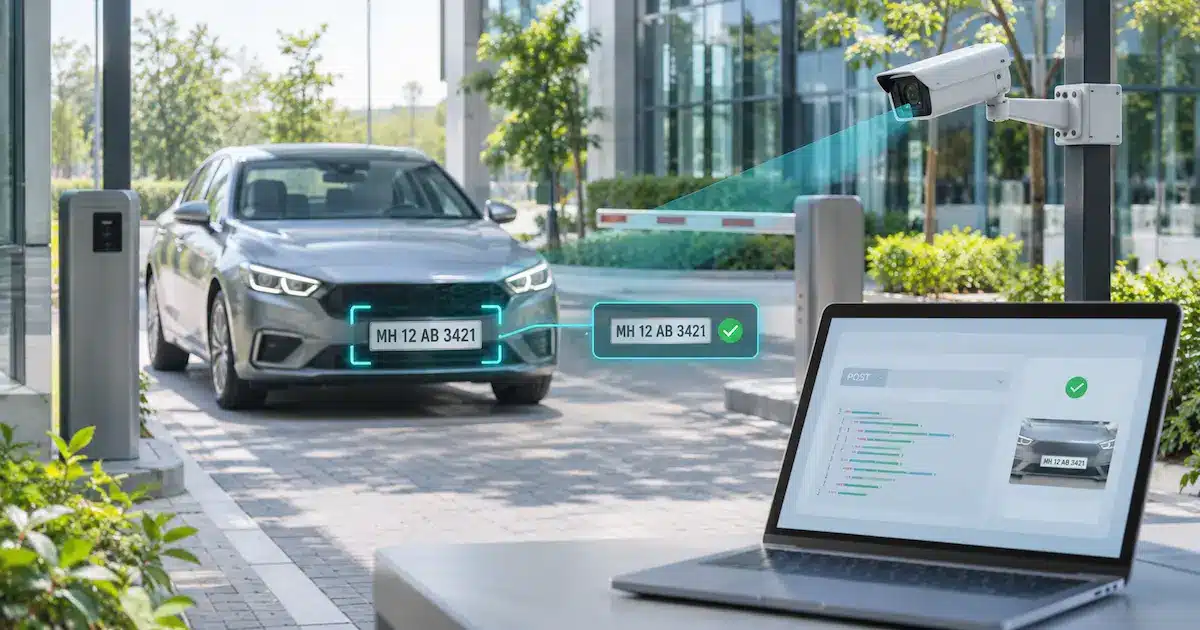
ANPR API: 7 Essential Steps for Successful Automatic Number Plate Recognition Integration
An ANPR API enables developers to integrate automatic number plate recognition into applications without building a computer vision system from scratch. It converts vehicle images into structured license plate information that software can process automatically.
Businesses increasingly use this technology for parking management, vehicle access control, fleet management, and intelligent transportation systems.
By combining artificial intelligence, computer vision, and optical character recognition (OCR), ANPR technology can reduce manual data entry and improve vehicle identification workflows.
However, successful integration requires more than connecting an application to a recognition service. Developers must also consider image quality, API security, response times, recognition accuracy, and data privacy.
This guide explains how automatic number plate recognition works, seven essential integration steps, practical business applications, and best practices for building reliable recognition systems.
Table of Contents
- What Is an ANPR API?
- How Does Automatic Number Plate Recognition Work?
- Seven Essential Steps to Integrate an ANPR API
- Real-World Applications of ANPR Technology
- Security, Accuracy, and Integration Best Practices
- Frequently Asked Questions
- Conclusion
1. What Is an ANPR API?
An ANPR API is an application programming interface that allows software to access automatic number plate recognition functionality.
ANPR stands for Automatic Number Plate Recognition. It is also commonly known as Automatic License Plate Recognition (ALPR).
Instead of manually entering a vehicle’s registration number, an application can submit an image to a recognition service and receive machine-readable results.
Depending on the implementation, these results may include:
- Vehicle registration number
- License plate detection confidence
- Plate location within an image
- Character recognition confidence
- Processing information
- Recognition status
The available fields depend on the selected API or SDK.
ANPR API vs. ANPR SDK
Although APIs and SDKs provide similar recognition capabilities, they have different integration approaches.
| Feature | ANPR API | ANPR SDK |
|---|---|---|
| Integration | Service requests | Software library |
| Processing | Remote or local server | Often within the application or device |
| Internet access | Depends on deployment | May support offline operation |
| Updates | Service-side updates | SDK updates may be required |
| Development control | Service-dependent | Greater direct control over integration |
| Common use cases | Web and backend systems | Mobile and embedded applications |
An API can simplify integration across multiple applications. An SDK may be more suitable when developers require local processing, offline functionality, or direct control over recognition.
Explore the MiniAiLive License Plate Recognition SDK to learn more about AI-powered vehicle recognition and mobile integration.
2. How Does Automatic Number Plate Recognition Work?
Modern ANPR systems use multiple computer vision techniques to transform vehicle images into readable registration numbers.
Image capture
The recognition process begins with a camera capturing a vehicle image or video frame.
Common image sources include parking entrance cameras, mobile devices, traffic cameras, and vehicle access systems.
Clear images generally provide better recognition results than blurry or poorly illuminated images.
License plate detection
A computer vision model examines the image and identifies regions that may contain a license plate.
The system isolates the plate from surrounding objects, including vehicle headlights, bumpers, and background elements.
Image preprocessing
The detected plate region may undergo preprocessing to improve readability.
Common techniques include:
- Image rotation and perspective correction
- Noise reduction
- Contrast adjustment
- Brightness correction
- Image resizing
These techniques can help recognition models interpret characters more effectively.
Optical character recognition
OCR converts the visible letters and numbers into digital text.
Machine learning models can recognize different character styles and plate layouts, depending on their training data and supported formats.
Result validation
The application receives the extracted registration number and evaluates the recognition result.
It may check regional plate formats, confidence scores, and duplicate events before taking further action.
3. Seven Essential Steps to Integrate an ANPR API
A successful ANPR API integration requires careful planning, implementation, and testing.
Step 1: Define your application requirements
Identify the purpose of your recognition system before selecting a technology.
For example, a parking management platform may require fast recognition at entry and exit points. A fleet management application may prioritize registration accuracy and event recording.
Consider the expected image volume, supported plate formats, processing latency, privacy requirements, and deployment environment.
Step 2: Choose the right recognition solution
Evaluate whether a hosted API, self-hosted recognition service, or mobile SDK meets your requirements.
Important selection criteria include recognition accuracy, supported operating systems, image input formats, scalability, documentation, and licensing terms.
MiniAiLive’s published LPR SDK information describes Android and iOS support, along with photo and video recognition modes.
Developers should confirm API availability, deployment options, and supported interfaces directly with the provider.
Step 3: Configure API authentication
If your chosen recognition service provides an HTTP API, configure its authentication mechanism according to the official documentation.
Many services use API keys, access tokens, or other credentials.
Store credentials in server-side environment variables or a secure secrets management system. Avoid placing private API keys directly in public frontend applications.
Step 4: Capture and prepare vehicle images
Prepare images that meet the recognition service’s input requirements.
Position cameras appropriately, ensure sufficient lighting, and minimize motion blur.
For mobile applications, developers can provide visual guidance to help users capture readable license plates.
Check supported image formats and file size limits before submitting requests.
Step 5: Send recognition requests
A typical ANPR API integration sends an image to a recognition endpoint using an HTTP request.
The following JavaScript example demonstrates a generic integration pattern using Node.js:
import { readFile } from "node:fs/promises";

async function recognizePlate(imagePath) {
  const image = await readFile(imagePath);

  const form = new FormData();

  form.append(
    "image",
    new Blob([image], { type: "image/jpeg" }),
    "vehicle.jpg"
  );

  const response = await fetch(
    process.env.ANPR_ENDPOINT,
    {
      method: "POST",
      headers: {
        Authorization:
          `Bearer ${process.env.ANPR_API_KEY}`
      },
      body: form,
      signal: AbortSignal.timeout(10000)
    }
  );

  if (!response.ok) {
    throw new Error(
      `Recognition failed: ${response.status}`
    );
  }

  return response.json();
}
This is an illustrative integration example, not an official MiniAiLive API implementation. Replace the endpoint, authentication method, and request fields with those specified by your chosen provider.
Step 6: Process and validate recognition results
A recognition service may return structured JSON data similar to this example:
{
  "status": "success",
  "plate_number": "DEMO123",
  "confidence": 0.97
}
These fields and values are illustrative rather than actual product specifications.
Your application should validate the response before using it. Low-confidence results may require another image capture or manual review.
A recognition result should not automatically be treated as proof of vehicle ownership or driver identity.
Step 7: Test, deploy, and monitor performance
Test the integration under realistic operating conditions.
Include daytime and nighttime images, different vehicle types, regional plate formats, difficult viewing angles, and poor weather.
Monitor recognition failures, incorrect results, processing latency, and service availability.
Regular testing helps developers identify weaknesses and improve system performance over time.
4. Real-World Applications of ANPR Technology
An ANPR API can support many commercial and industrial applications.
Smart parking management
Parking systems can recognize vehicle registration numbers at entrances and exits.
The recognized information can support parking session management, authorized vehicle checks, and automated payment workflows.
This reduces the need for manual registration entry.
Vehicle access control
Residential communities, office buildings, and logistics facilities can use license plate recognition as part of their access management systems.
The application compares recognized registration numbers with authorized vehicle records before making an access decision.
Sensitive locations may require additional verification methods because license plates can be copied or misread.
Fleet management
Fleet operators can use vehicle recognition to record authorized arrivals and departures.
This can improve operational visibility and reduce manual vehicle logging.
Intelligent transportation systems
Transportation organizations may use ANPR technology for authorized vehicle counting, traffic analysis, and transportation management.
These applications require appropriate privacy protections and compliance with applicable regulations.
For additional information about automated parking applications, read MiniAiLive’s article on license plate recognition systems for parking management.
5. Security, Accuracy, and Integration Best Practices
Building a reliable recognition system requires attention to both technical performance and responsible data handling.
Protect API credentials and vehicle data
Use encrypted HTTPS connections and secure authentication methods.
Limit API access to authorized applications and avoid exposing recognition credentials in client-side code.
The OWASP guidance on broken API authentication explains important authentication risks that developers should address.
Implement rate limiting and error handling
Recognition services can consume significant computing resources when processing large numbers of images.
Apply request limits, file size restrictions, reasonable timeouts, and controlled retry mechanisms.
The OWASP guidance on unrestricted resource consumption provides useful recommendations for protecting API resources.
Improve recognition accuracy
Several environmental factors can affect recognition performance.
| Challenge | Recommended approach |
|---|---|
| Poor lighting | Use suitable camera illumination |
| Motion blur | Adjust camera capture settings |
| Dirty license plates | Request another image or manual review |
| Difficult viewing angles | Improve camera positioning |
| Different plate formats | Test supported regional formats |
| Duplicate recognition | Filter repeated vehicle events |
| Low-confidence results | Apply validation and review rules |
Avoid assuming that any recognition system can achieve perfect accuracy under every condition.
Measure performance using representative images from your intended deployment environment.
Respect vehicle data privacy
License plate information may constitute personal data, depending on the jurisdiction and how it is used.
Collect only necessary information, restrict access to stored records, and establish appropriate retention periods.
Organizations should define a legitimate purpose for collecting vehicle information and evaluate applicable privacy requirements before deployment.
Choose an appropriate deployment model
A hosted recognition service may simplify centralized application integration.
Local or edge-based processing may reduce network dependencies and limit the amount of image data transferred outside a device.
The best deployment model depends on your application requirements, infrastructure, security policies, and available SDK capabilities.
6. Frequently Asked Questions
What is an ANPR API used for?
An ANPR API extracts vehicle registration numbers from images or video frames and makes the results available to software applications.
Common applications include parking management, vehicle access control, and fleet operations.
What is the difference between ANPR and ALPR?
ANPR and ALPR generally refer to the same technology. ANPR means Automatic Number Plate Recognition, while ALPR means Automatic License Plate Recognition.
The terminology varies across regions.
Can an ANPR API work at night?
Recognition may work at night when the camera provides sufficient image quality and illumination.
Performance depends on camera hardware, environmental conditions, plate characteristics, and the recognition model.
Can ANPR technology work offline?
Some locally deployed recognition systems and SDKs can operate without an internet connection.
Hosted APIs generally require connectivity to the recognition server. Developers should verify offline support before selecting a solution.
How can developers improve ANPR accuracy?
Developers can improve image capture quality, select suitable camera positions, test regional license plate formats, and implement confidence-based validation.
Regular monitoring and realistic testing are also important.
7. Conclusion
An ANPR API provides a practical way to integrate automatic number plate recognition into modern software applications.
By combining AI-powered computer vision, OCR, and structured data processing, businesses can automate vehicle identification and reduce manual workloads.
Successful integration requires a suitable recognition solution, reliable image capture, secure authentication, response validation, and continuous performance monitoring.
Developers must also consider recognition limitations and vehicle data privacy.
Explore the MiniAiLive website to learn more about license plate recognition technology and discuss suitable SDK integration options for your next computer vision project.