
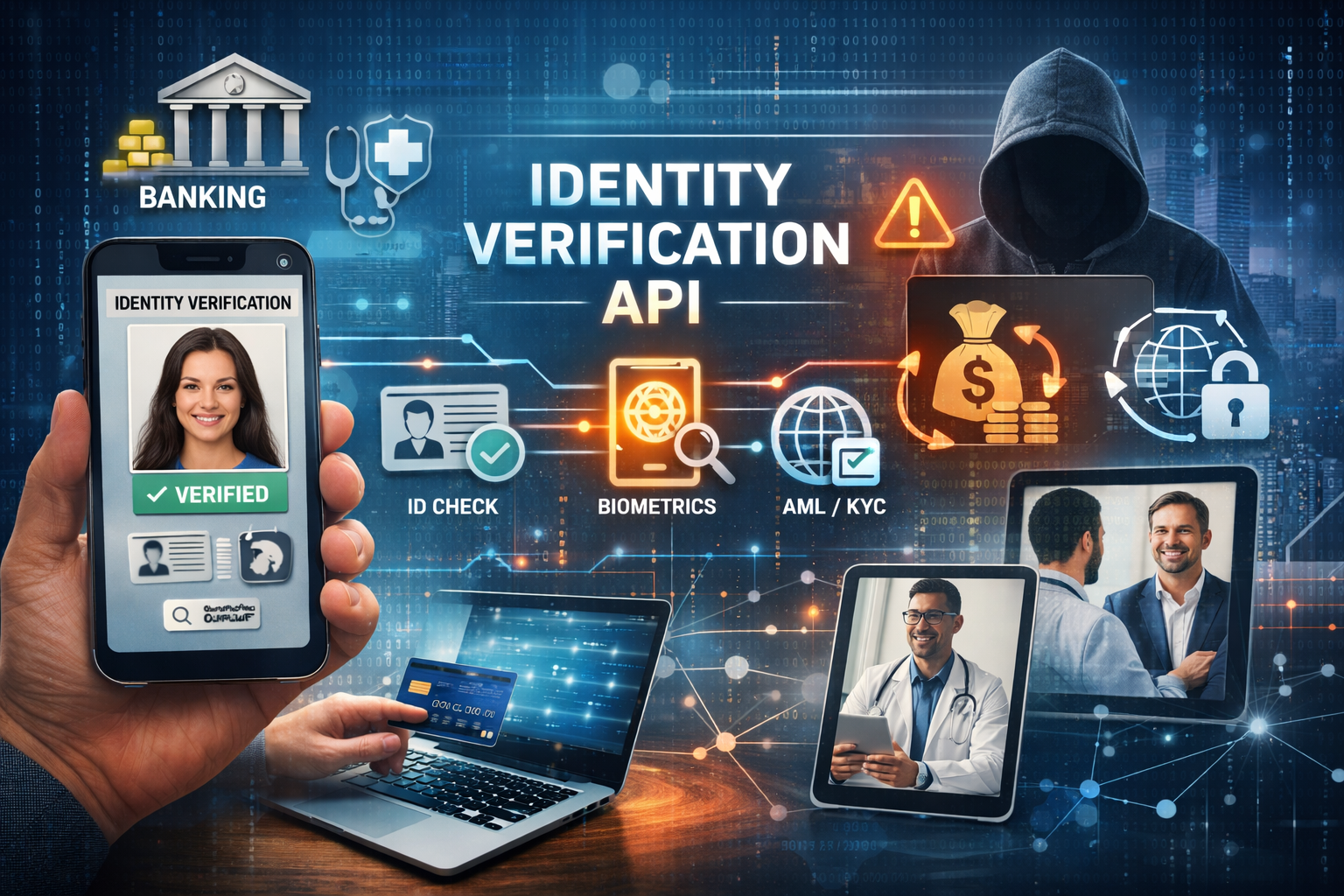
This is where Identity Verification API come into play.
In today’s hyper-digital world, identity has become the cornerstone of trust. As businesses increasingly operate online, verifying who a customer truly is has never been more critical—especially in regulated industries such as banking, fintech, healthcare, insurance, telecommunications, and government services. Regulatory scrutiny is rising, fraud tactics are becoming more sophisticated, and customer expectations for seamless digital experiences are higher than ever.
Identity verification APIs are transforming how regulated industries approach compliance, security, fraud prevention, and customer onboarding. By automating identity checks, integrating real-time verification, and leveraging advanced technologies like AI and biometrics, these APIs are redefining compliance from a costly obligation into a strategic advantage.
This comprehensive guide explores how identity verification APIs work, why they matter, the regulatory challenges they address, and how they are reshaping regulated industries worldwide.
Table of Contents
-
The Growing Importance of Identity Verification
-
What Are Identity Verification APIs?
-
Why Regulated Industries Need Advanced Identity Verification
-
Key Regulations Driving Identity Verification Adoption
-
Core Components of Identity Verification APIs
-
How Identity Verification APIs Enhance Compliance
-
Strengthening Security and Fraud Prevention
-
Improving Customer Experience Without Compromising Compliance
-
Industry Use Cases
-
Banking & Financial Services
-
Fintech & Digital Payments
-
Healthcare
-
Insurance
-
Telecommunications
-
Government & Public Sector
-
-
AI, Biometrics, and the Future of Identity Verification
-
Challenges and Considerations When Implementing Identity Verification APIs
-
Best Practices for Choosing the Right Identity Verification API
-
The Business Impact: Cost Reduction, Scalability, and Trust
-
The Future of Identity Verification in Regulated Industries
-
Conclusion
1. The Growing Importance of Identity Verification
Digital transformation has revolutionized how businesses interact with customers. From opening a bank account online to accessing telemedicine services, users expect fast, frictionless digital experiences. However, this convenience has also created new opportunities for fraud, identity theft, and regulatory violations.
According to industry reports, identity fraud losses cost businesses billions of dollars annually. Synthetic identity fraud, account takeovers, and document forgery are increasingly difficult to detect using traditional manual verification methods.
For regulated industries, failure to properly verify identities doesn’t just lead to financial losses—it can result in severe penalties, reputational damage, and loss of operating licenses.
As a result, identity verification has shifted from being a back-office function to a mission-critical capability.
2. What Are Identity Verification APIs?
An Identity Verification API is a software interface that allows businesses to integrate identity verification services directly into their applications, websites, or internal systems.
Instead of building complex verification workflows from scratch, organizations can use APIs to access pre-built, compliant, and scalable identity verification capabilities.
Key Functions of Identity Verification APIs
-
Document verification (passports, driver’s licenses, national IDs)
-
Biometric verification (facial recognition, liveness detection)
-
Data validation against trusted databases
-
Address and phone number verification
-
Age and identity checks
-
Ongoing monitoring and re-verification
APIs enable real-time verification while maintaining flexibility, scalability, and regulatory alignment.
3. Why Regulated Industries Need Advanced Identity Verification
Regulated industries operate under strict legal and compliance frameworks designed to protect consumers, prevent financial crime, and safeguard sensitive data.
Key Drivers
-
Rising Fraud Rates: Fraudsters continuously adapt, using deepfakes, stolen data, and synthetic identities.
-
Stricter Regulations: Governments are tightening KYC, AML, and data protection laws.
-
Digital-First Customers: Users expect instant onboarding without manual paperwork.
-
Global Expansion: Businesses operate across borders with varying regulatory requirements.
Traditional verification methods—manual reviews, in-person checks, and static databases—are no longer sufficient.
4. Key Regulations Driving Identity Verification Adoption
Identity verification APIs help organizations comply with a wide range of global and regional regulations.
Major Regulations Include:
Know Your Customer (KYC)
Requires businesses to verify customer identities before establishing relationships.
Anti-Money Laundering (AML)
Prevents financial systems from being used for money laundering or terrorist financing.
General Data Protection Regulation (GDPR)
Mandates secure handling of personal data in the EU.
Payment Services Directive 2 (PSD2)
Requires strong customer authentication for electronic payments.
Health Insurance Portability and Accountability Act (HIPAA)
Protects sensitive patient data in healthcare.
FATF Recommendations
Global standards for combating financial crime.
Identity verification APIs are designed to adapt to these regulations while maintaining audit-ready documentation.
5. Core Components of Identity Verification APIs
5.1 Document Verification
APIs verify government-issued IDs by:
-
Checking authenticity features
-
Extracting and validating data
-
Detecting tampering or forgery
5.2 Biometric Verification
Facial recognition and liveness detection ensure the person presenting the ID is physically present and real.
5.3 Database Checks
Verification against trusted data sources such as:
-
Government registries
-
Credit bureaus
-
Sanctions and watchlists
5.4 Risk Scoring
APIs generate risk scores based on multiple data points, helping businesses make informed decisions.
6. How Identity Verification APIs Enhance Compliance
Compliance is no longer just about ticking boxes—it’s about proving due diligence.
Identity verification APIs support compliance by:
-
Automating KYC and AML checks
-
Maintaining detailed audit trails
-
Enabling real-time verification
-
Supporting ongoing customer monitoring
-
Adapting to regulatory changes without system overhauls
Automation significantly reduces human error and ensures consistency across all customer interactions.
7. Strengthening Security and Fraud Prevention
Identity verification APIs provide multi-layered defense against fraud.
Fraud Prevention Capabilities
-
Detection of fake or altered documents
-
Prevention of identity spoofing
-
Biometric matching to prevent impersonation
-
Behavioral and device analysis
-
Continuous monitoring for suspicious activity
These capabilities dramatically reduce fraud while minimizing false positives.
8. Improving Customer Experience Without Compromising Compliance
One of the biggest misconceptions is that strong security creates friction.
Modern identity verification APIs are designed to be:
-
Fast (verification in seconds)
-
Mobile-friendly
-
User-centric
-
Accessible across devices
By reducing manual steps, businesses can onboard customers quickly while remaining compliant.
9. Industry Use Cases
9.1 Banking & Financial Services
Banks use identity verification APIs to:
-
Onboard customers digitally
-
Comply with KYC and AML regulations
-
Prevent account takeovers
-
Enable secure remote transactions
9.2 Fintech & Digital Payments
Fintech companies rely on APIs for:
-
Instant account creation
-
Cross-border compliance
-
Fraud prevention at scale
9.3 Healthcare
Healthcare providers use identity verification to:
-
Protect patient records
-
Prevent insurance fraud
-
Enable secure telehealth services
9.4 Insurance
Identity verification helps insurers:
-
Prevent false claims
-
Verify policyholders
-
Speed up customer onboarding
9.5 Telecommunications
Telecom providers use verification to:
-
Prevent SIM swap fraud
-
Verify subscribers
-
Comply with national ID regulations
9.6 Government & Public Sector
Governments use identity APIs for:
-
Digital citizen services
-
Secure access to benefits
-
National ID programs
10. AI, Biometrics, and the Future of Identity Verification
Artificial intelligence and machine learning are powering the next generation of identity verification.
Emerging Technologies
-
AI-driven document analysis
-
Advanced facial recognition
-
Passive liveness detection
-
Behavioral biometrics
-
Continuous identity assurance
These technologies enable higher accuracy while reducing friction.
11. Challenges and Considerations When Implementing Identity Verification APIs
Despite their benefits, implementation requires careful planning.
Common Challenges
-
Data privacy concerns
-
Integration complexity
-
Regulatory differences across regions
-
Balancing security and user experience
-
Vendor selection
A clear strategy and trusted API provider are essential.
12. Best Practices for Choosing the Right Identity Verification API
When selecting an API, consider:
-
Regulatory coverage
-
Accuracy and fraud detection rates
-
Scalability and performance
-
Ease of integration
-
Data privacy and security certifications
-
Global document and language support
Choosing the right partner ensures long-term success.
13. The Business Impact: Cost Reduction, Scalability, and Trust
Identity verification APIs deliver tangible business benefits:
-
Reduced operational costs
-
Faster customer onboarding
-
Lower fraud losses
-
Improved compliance posture
-
Increased customer trust and retention
Compliance becomes an enabler, not a bottleneck.
14. The Future of Identity Verification in Regulated Industries
The future points toward continuous identity verification, decentralized digital identities, and privacy-first verification models.
As regulations evolve and fraud becomes more complex, identity verification APIs will remain a foundational element of digital trust.
15. Conclusion
Identity verification APIs are no longer optional for regulated industries—they are essential.
By transforming compliance into a streamlined, automated, and customer-friendly process, these APIs empower organizations to operate securely, scale globally, and build lasting trust.
As digital ecosystems continue to expand, businesses that invest in robust identity verification solutions will be best positioned to thrive in a highly regulated, security-conscious world.