
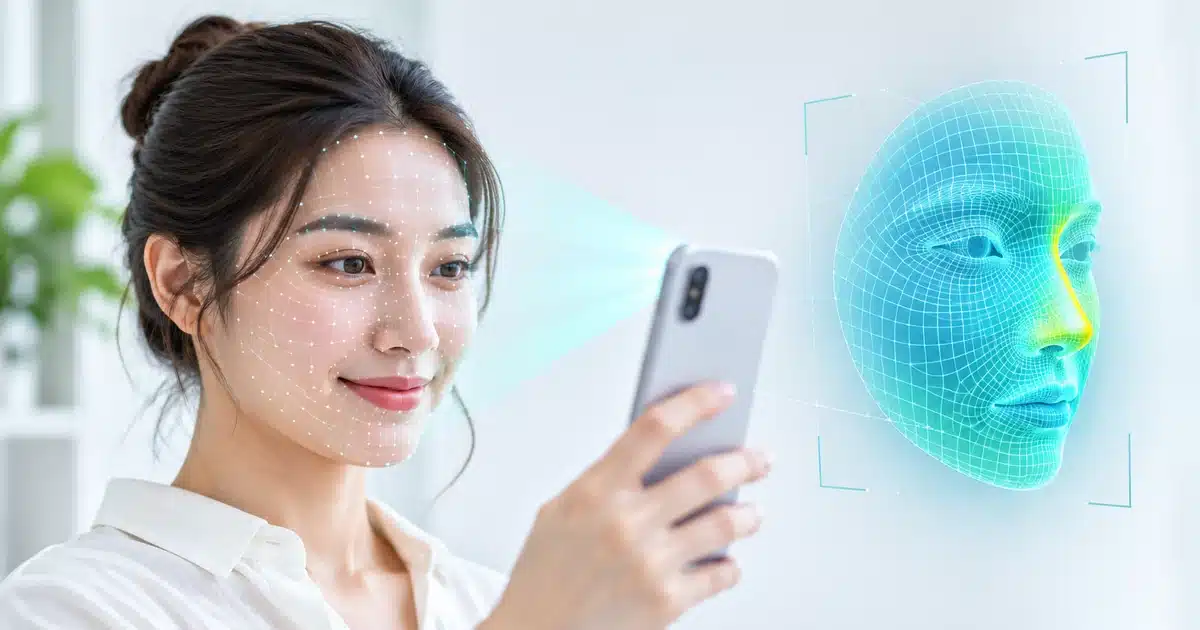
3D face liveness detection adds an important question to digital identity checks: is the camera seeing a real person, or an imitation of a face? A photo, recorded video, or realistic mask can resemble the person an account belongs to. A facial recognition system that checks only identity similarity may not notice how the image reached the camera.
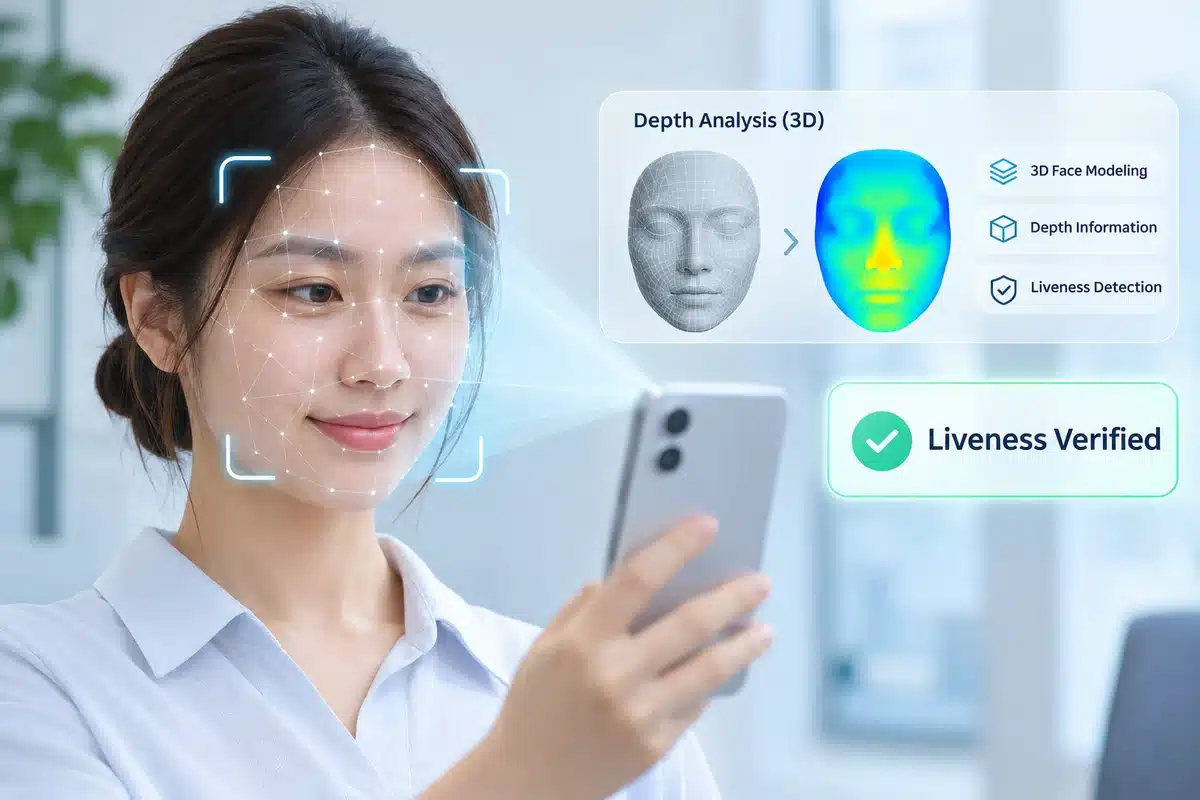
Depth analysis looks for the three-dimensional shape of a face. The nose, cheeks, eye sockets, and chin occupy different distances from a sensor, whereas a flat photograph usually does not. This information can help a biometric system identify some spoofing attempts before it trusts a face match.
In this guide, we explain how depth analysis works, its five main security benefits, where it is useful, and why it must be combined with other defenses.
What Is 3D Face Liveness Detection?
3D face liveness detection is an approach to checking whether a face presented to a camera is consistent with a physically present, living person. It uses information about facial geometry, often alongside image texture, motion, illumination, or other signals. The wider security task is called presentation attack detection (PAD): identifying attempts to fool a biometric capture system with an artificial or reproduced sample.
Liveness detection and face matching solve different problems. Face matching asks whether two faces are likely to belong to the same person. Liveness detection asks whether the current capture appears genuine. A system may need both checks, followed by an appropriate authentication or identity-verification decision.
A useful distinction is that three-dimensional does not automatically mean alive. A molded mask has depth too. The system must evaluate whether the combined evidence looks like a real, live presentation, not merely whether the surface is curved.
How Does Facial Depth Analysis Work?
For 3D face liveness detection, depth describes how far different points on an object are from the camera or sensor. A depth map represents those distances across the face, helping software examine the shape of the forehead, nose bridge, cheeks, and surrounding features.
Step 1: Capture a usable face sample
A camera collects one or more images. The software finds the face, checks framing and image quality, and estimates landmarks such as the eyes, nose, and mouth. Poor lighting, blur, or an obstructed face can reduce the quality of the evidence.
Step 2: Measure or estimate facial depth
There are several approaches. Structured light projects a known pattern and measures how it changes across the surface. Time-of-flight (ToF) sensing estimates distance using the travel time of emitted light. Stereo cameras estimate depth from differences between viewpoints.
Systems that use ordinary RGB cameras may instead infer depth from images or motion using computer vision and machine learning. This is useful, but inferred depth is not the same as an independent measurement from a dedicated depth sensor. The available evidence depends on the hardware and SDK design.
Step 3: Compare shape with other liveness cues
The system can examine whether facial contours are plausible and whether they agree with texture, reflections, motion, and other observed characteristics. For example, a flat image may show a realistic face pattern while providing little physical depth variation. However, a realistic three-dimensional mask requires additional checks.
Step 4: Make a risk-based decision
The application evaluates the resulting liveness signal, capture quality, and any matching result. If evidence is insufficient, it may ask the user to retry or move to an alternative verification method. A liveness score should not be treated as proof of legal identity.
2D vs. 3D: Five Benefits for Biometric Security
3D face liveness detection can add information that is missing from a single flat image. The value depends on the attack type, capture method, and the quality of the implementation.
| Consideration | Primarily 2D image analysis | Depth-aware analysis |
|---|---|---|
| Main evidence | Color, texture, reflection, motion | Facial shape and relative distances, possibly alongside 2D cues |
| Printed photograph | Can look visually similar to a face | A genuinely flat print usually lacks human facial depth |
| Screen replay | May imitate expression and movement | A flat display can reveal inconsistent surface geometry |
| Realistic 3D mask | May use material or texture clues | Depth alone may not distinguish the mask from a live face |
| Hardware needs | Can run with a standard camera | Measured depth may require specialized sensors; inferred depth may not |
1. Stronger clues against printed-photo attacks
One benefit of 3D face liveness detection is that a high-resolution photograph can preserve facial details well enough to resemble its owner. But the paper surface remains mostly flat. Measured depth can help expose that difference, even when the image itself looks convincing.
2. Better resistance to flat-screen video replays
A replayed video can display natural blinks and facial expressions. Those movements are still shown on a screen surface. Depth-aware checks can add a geometric signal that a simple video playback may not reproduce.
3. More evidence than appearance alone
Image texture can change because of lighting, makeup, camera compression, or screen reflections. Combining geometry with other cues gives the detection system more than one kind of evidence. That does not guarantee better results in every environment, but it can improve the design of a layered defense.
4. Potential for smoother passive verification
Some systems can assess liveness while the user simply looks at a camera. This is called passive liveness detection. It can reduce repeated prompts to blink, smile, or turn the head. However, passive operation is a product design choice, not an automatic feature of every depth sensor.
5. Better context for risk-based authentication
A depth-based signal can inform decisions about whether to accept a capture, retry it, or request another factor. For a sensitive transaction, liveness is most useful when paired with secure session controls and identity matching, rather than used as the sole gatekeeper.
Where Is Depth-Based Liveness Useful?
Remote banking and fintech onboarding
A customer opening an account may need to capture an ID document and a selfie. Liveness checks help assess whether a person is present during selfie capture. Face matching can then compare that selfie with the document portrait, while separate controls assess document authenticity and fraud risk. These steps have different purposes and should not be confused.
Account recovery and high-risk changes
When a customer resets account access or changes payment details, an organization may require stronger verification. Liveness can be one part of that process, alongside possession-based authentication, transaction monitoring, and controls against account takeover.
Physical access and unattended kiosks
Office entrances, self-service terminals, and visitor systems may use face recognition. A depth-aware check can help identify some attempts to hold up a photo or a screen in front of the camera. The design still needs secure device management, privacy safeguards, and an accessible alternative for people who cannot complete a biometric check.
Security Limits and SDK Implementation
Understand what depth cannot prove
A 3D mask may reproduce much of the shape of a human face, so depth alone cannot rule it out. Artificial faces, unusual lighting, camera movement, and sensor noise can also complicate decisions. More importantly, a compromised camera pipeline may inject fabricated images directly into software, bypassing the physical presentation checks that depth analysis was intended to strengthen.
Developers should use 3D face liveness detection as one defense in a broader identity-security design. Protect the capture path, authenticate devices where appropriate, secure API traffic, limit retries, monitor suspicious patterns, and provide a fallback route for legitimate users.
Evaluate accuracy with realistic attacks
Do not rely on a single marketing accuracy percentage. Test genuine users across devices and lighting conditions, and separately test the relevant presentation attacks: printouts, displays, masks, and other likely threats. Measure both attacks that are incorrectly accepted and legitimate users who are incorrectly rejected.
The international standard ISO/IEC 30107-3:2023 describes principles for assessing and reporting PAD performance. The NIST Digital Identity Guidelines, SP 800-63B also address biometric PAD, sensor integrity, and the need to protect sensitive biometric data. Those guidelines do not mean any particular SDK is certified or suitable for every use case.
Plan privacy and accessibility from the start
Biometric images and templates require careful handling. Collect only what is necessary, explain the purpose of collection, set appropriate retention periods, encrypt sensitive data, restrict access, and consider the laws that apply in each deployment region. Test for differences in error rates across demographic groups, devices, and environmental conditions.
Always provide a practical alternative to face-based verification. Accessibility and false-rejection handling affect both security and user trust.
Integrating a MiniAiLive SDK
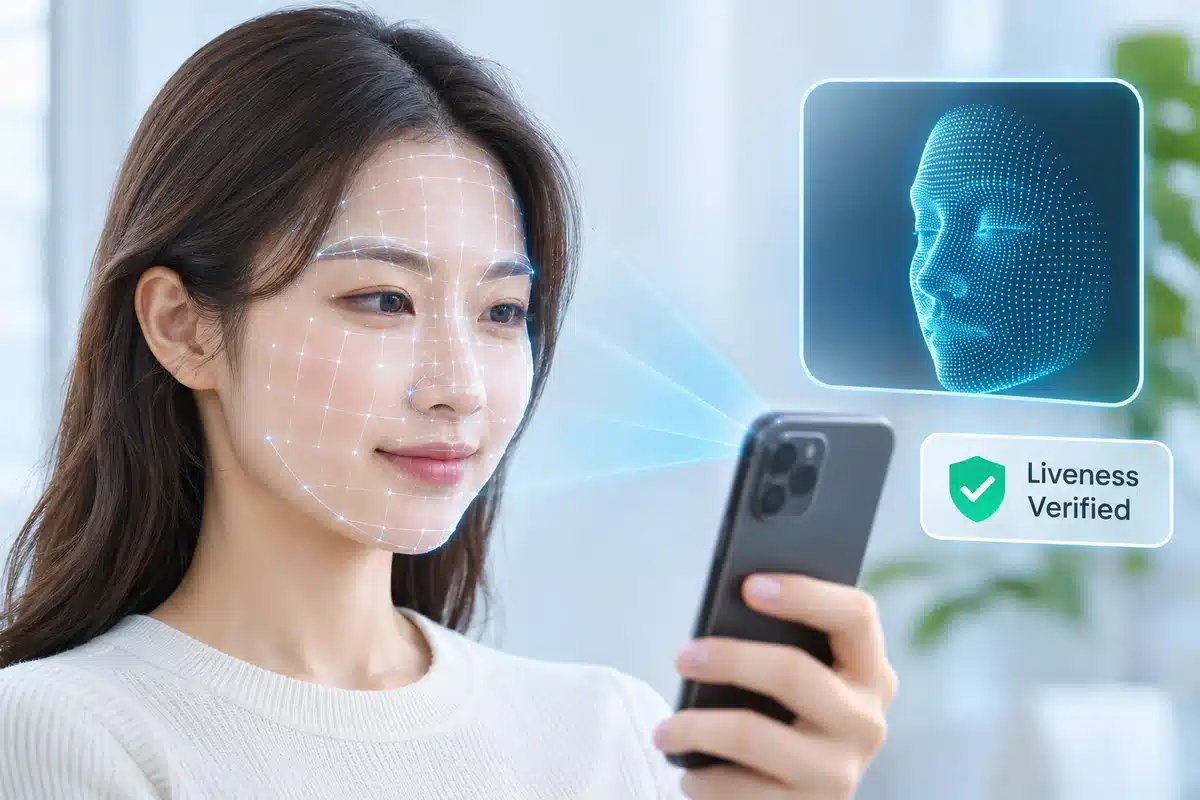
MiniAiLive publicly describes a Face Liveness Detection solution with passive 3D anti-spoofing capabilities. Its Face Recognition SDK page describes related face-detection and matching functions. The Face Liveness Detection SDK documentation also discusses passive and active modes and client/server processing options.
For an implementation, start by checking which platforms and capture methods your selected SDK version supports. Confirm whether its claimed 3D analysis uses a hardware depth sensor, software-estimated depth, or a combination for the devices you plan to support. Then test the SDK with real cameras and attack examples before choosing acceptance thresholds. Connect the result to your existing identity verification, logging, privacy, and step-up authentication workflows.
These are general integration steps, not a claim that every MiniAiLive SDK version provides every sensing method or deployment option.
Frequently Asked Questions
Does 3D face liveness detection need a special camera?
Not always. Direct depth measurement may require structured-light, ToF, or stereo hardware. Some software uses a normal camera to estimate three-dimensional cues. The two approaches do not provide identical evidence, so check the SDK and device requirements.
Can depth analysis stop deepfake videos?
It may help identify a deepfake played on a flat screen. It does not automatically stop digitally injected or synthetic camera feeds. Defenses against injection attacks and other manipulation remain necessary.
Is passive liveness detection as secure as active detection?
Neither method is universally stronger. Results depend on the implementation, threat model, sensor, and tests. Passive checks can improve convenience; active challenges may supply additional evidence in some situations.
Does liveness detection identify the person?
No. It assesses whether the captured face appears to be a genuine live presentation. Face matching or another identity process is needed to establish whose face it is.
Conclusion
3D face liveness detection can improve biometric security by checking facial geometry as well as appearance. It offers valuable clues against flat photos and screen replays, supports richer risk decisions, and may enable convenient passive verification. But depth is not proof of life by itself, and realistic masks, sensor limitations, and injected feeds remain important concerns.
A strong solution combines liveness, face matching, secure capture, privacy protections, and independent testing. To explore an implementation, review MiniAiLive’s Face Liveness Detection solution and confirm the supported sensor requirements with its SDK documentation before deployment.